

Jigu Japanese
From your first kana to your first sentence.

Jigu Japanese takes beginners from kana to vocabulary and short conversations across 243 lessons. Listen, explore letter shapes, practise spelling and return for scheduled review.
Made for you if
- Beginners who want an ordered path from script to conversation
- Learners who want listening, recognition and spelling practice
Probably not for you if
- Learners seeking live teacher correction
- Learners seeking a complete exam preparation syllabus
What you get

- 01
Connect each kana with its sound
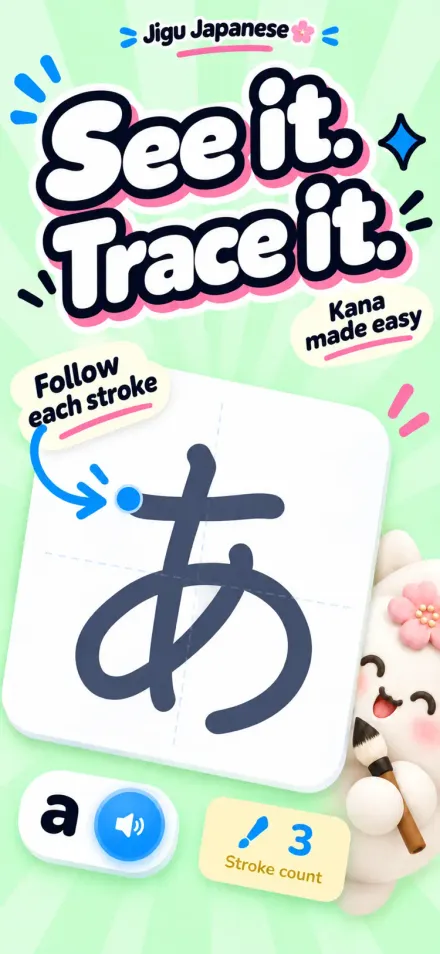
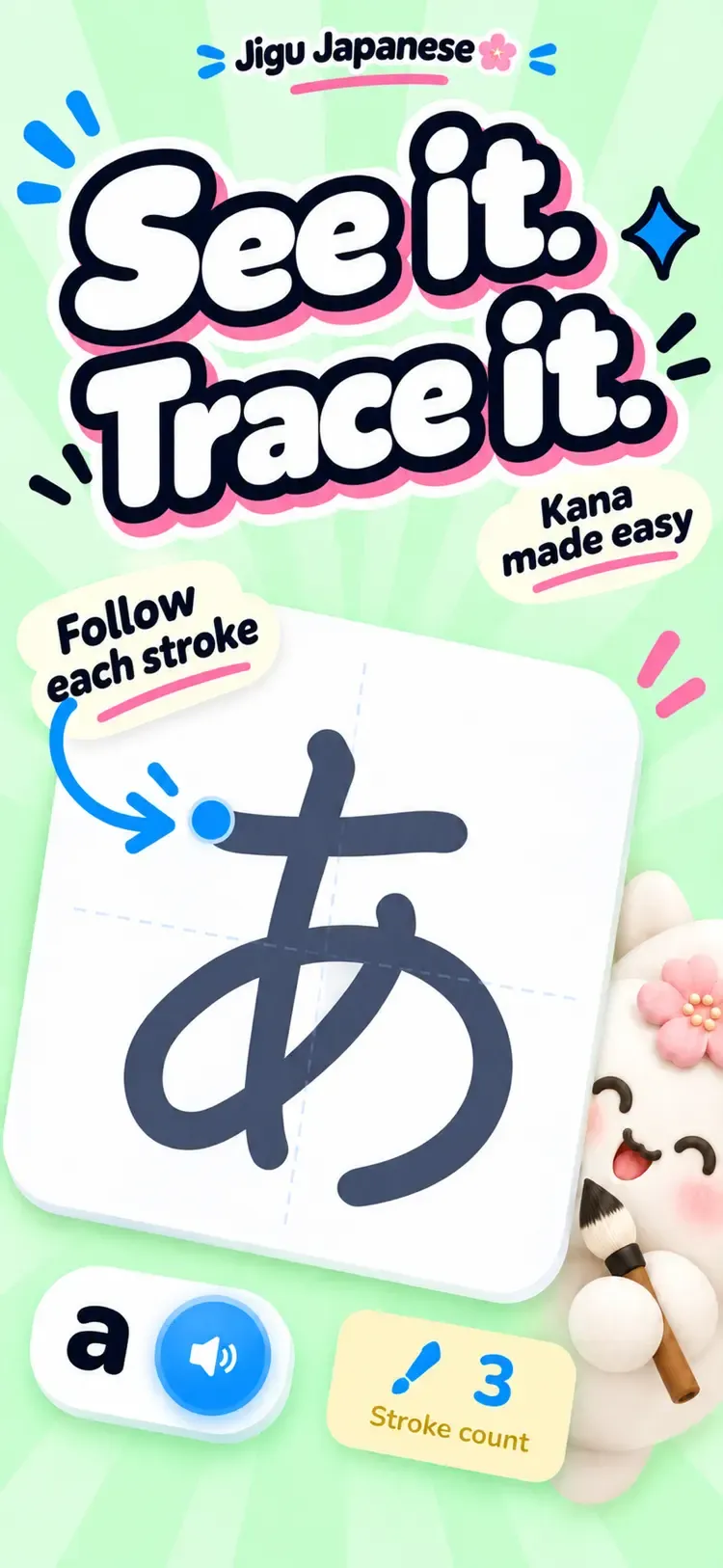
Listen, follow strokes and trace the shape. The script course covers 223 kana teaching items, including hiragana, katakana and combinations.
- 02
Practise a word in several ways
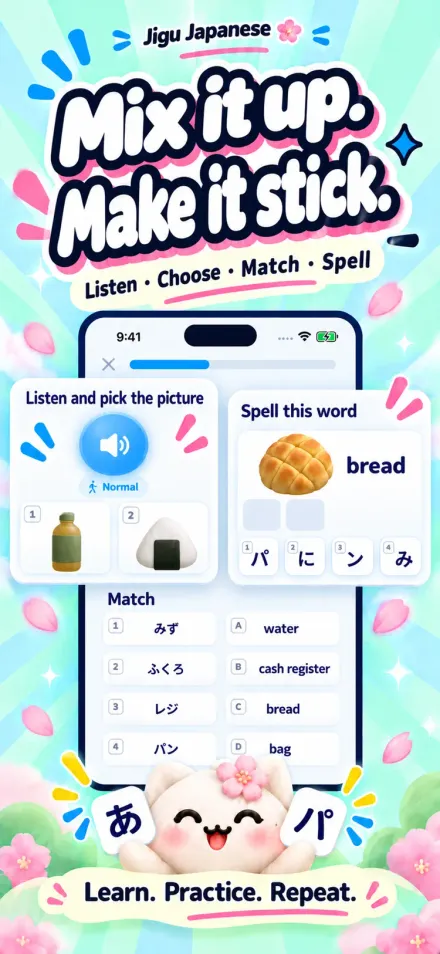
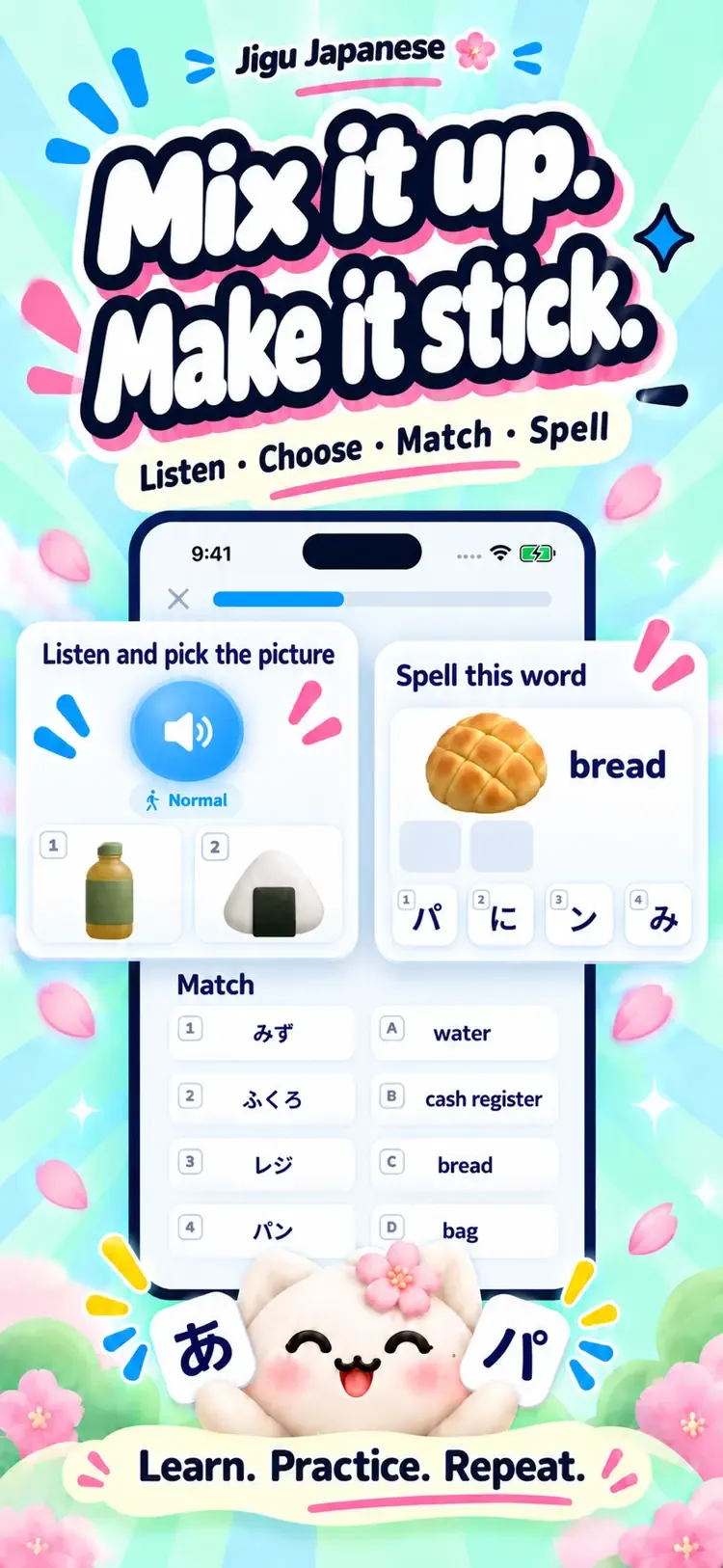
Learn 846 N5 words with pictures and audio, then practise listening choices, matching and spelling.
- 03
Take your turn in a dialogue
Move from vocabulary to 40 authored conversation lessons with listening and reply choices.
- 04
Return before the old material fades
Scheduled review and optional reminders help you revisit material. Members can also open dedicated mistake practice.
Your first five minutes
- 1
Choose a starting point
Start with hiragana. On iOS, choose your explanation language; HarmonyOS uses Simplified Chinese.
- 2
Hear and inspect the shape
Listen to the kana, follow its strokes and trace it.
- 3
Try it in an exercise
Work through listening, recognition or spelling before moving into vocabulary and dialogue practice.
- 4
Come back for review
Revisit due material and completed lessons before continuing with new content.
Free or paid?
Free to download. All 62 kana lessons, the first 18 vocabulary lessons and the first 5 conversation lessons are free. Membership opens the remaining content and flexible lesson selection.
Free
- Script
- All 62 lessons in chapter order
- Vocabulary
- First 18 lessons, with 108 word entries
- Conversation
- First 5 lessons
- Review
- Due review and replay of completed lessons
Membership
- Script
- Choose lessons freely
- Vocabulary
- Remaining 123 lessons
- Conversation
- Remaining 35 lessons
- Review
- Dedicated mistake practice
Questions
Can I start from zero?
Yes. Start with hiragana, then continue to words and conversations.
How much content is included?
There are 243 lessons and 846 N5 words. The script track has 223 kana teaching items.
Is the script course free?
Yes. All 62 kana lessons are free, studied in order within each chapter.
How much vocabulary can I study free?
The first two chapters contain 18 lessons and 108 word entries. Membership opens the remaining vocabulary lessons.
Can I practise conversation?
Yes. There are 40 authored conversation lessons with listening and reply choices. The first 5 are free.
Are English explanations available?
Yes, on iOS. Its five explanation languages are English, Simplified Chinese, Traditional Chinese, Korean and Thai. HarmonyOS uses Simplified Chinese.
Do I need an app account?
No app account is required for learning. Purchases use the relevant store account.
Can I study offline?
Course resources are bundled. Purchases require connectivity, and cached HarmonyOS membership has a time limit.
Where is progress saved?
Progress is saved locally. iOS members can also enable iCloud sync.
Which platforms are supported?
iOS and HarmonyOS. Use the matching download link on this page.
Guides
- How to Learn Hiragana Fast Without Relying on Romaji Learn hiragana through sound, small character groups, active recall and short words. Use a practical self-test to find what needs review instead of reciting the chart.
- Hiragana vs Katakana: Sounds, Uses and Examples Understand how hiragana and katakana share sounds but serve different roles. Read a mixed-script sentence and practise matching characters without relying on English.
- Japanese Kana Chart: Hiragana, Katakana and Romaji A complete basic kana chart with hiragana, katakana and romaji, followed by voiced sounds and contracted combinations. Learn how to use the chart to read actual words.
- Japanese Long Vowels, Small Tsu and Contracted Sounds Tell long vowels, small っ and combinations such as きゃ apart with worked examples, mora counts and practical mouth-position exercises for Japanese beginners.
- How Many Words for JLPT N5, and How Should You Study? Use a practical N5 vocabulary target without mistaking a word count for exam readiness. Connect words with listening, grammar and short sentences through worked examples.
- How to Start Learning Japanese: A Beginner Study Order Build a Japanese study sequence from kana and sound to vocabulary, sentence patterns, listening and simple replies, with practical checkpoints for each stage.
- How to Remember Katakana and Read Loanwords Remember katakana with shape contrasts, direct sound recall and short loanwords. Practise シ versus ツ, ソ versus ン, long vowels and small characters in context.
More from Gentleflow
-
 Ninefold 25,000 sudoku puzzles, from first steps to master.
-
 Kudoku Sudoku with sums, and a tutorial that walks you in.
-
 Sweeple Minesweeper without the guessing — hints explain every step.
-
 Arvia Tap an arrow — if its path is clear, it flies. Clear the board.
-
 Hachimi One cat per row, column and colour — and no two may touch.
-
 YIGE Slide the scrambled numbers back into order.
-
 Pixo Learn the English for everyday things, one illustrated scene at a time.
-
 Tribbit Vocabulary as a match-three game, course by course.
-
 Airclap Send files between your phone and computer — no cloud in between.
-
 Locary Pin the places you've been, with photos, voice notes and music.
-
 GT Alarm Quiet on public holidays, on time for make-up workdays.
-
 mydots Open and type. No titles, no folders.
-
 Jigu Korean From Hangul to your first Korean sentence.
-
 Jigu Russian From Cyrillic to your first Russian sentence.
-
 Jigu Indonesian From the sounds to your first Indonesian sentence.
-
 Jigu French From letters and sounds to your first French.
-
 Jigu Thai From Thai letters to your first Thai words.